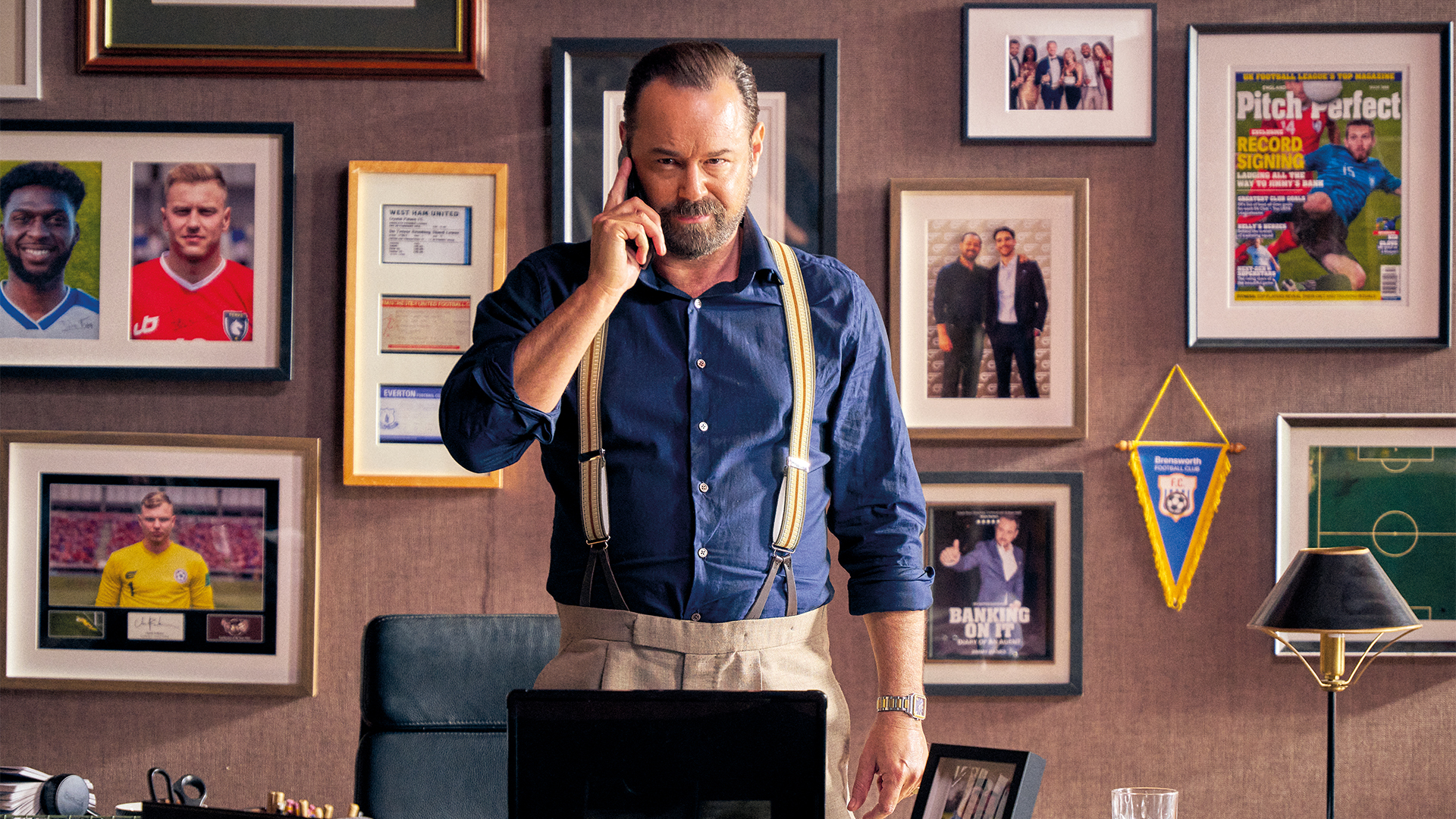
Danny Dyer's One Last Deal: An 89-Minute Office Drama Trap?
Picture this: you’re confined to a single office, observing a relentless, raging alcoholic football agent scream and swear over the phone for what feels like an eternity. This vivid, claustrophobic scenario encapsulates the essence of Danny Dyer's latest cinematic offering,
One Last Deal. For 89 minutes, viewers are thrust into the tumultuous world of Jimmy Banks, an old-school football agent whose career is on life support, clinging to the hope of securing – you guessed it – one last deal. The premise promises an intense character study within a confined space, a challenge many filmmakers embrace. But does this particular office drama manage to captivate, or does it merely trap its audience in a predictable and often uncomfortable experience? This
One Last Deal Review delves into whether Brendan Muldowney's film delivers the gritty entertainment Dyer fans expect or falls short of the mark.
The Claustrophobic Confines: A Deep Dive into Jimmy Banks' World
The very nature of
One Last Deal hinges on its singular setting: a London office that becomes both the stage and the cage for Jimmy Banks. Danny Dyer steps into the shoes of Banks, a man clearly past his prime in the cutthroat world of football agency. With a history of problems and only a single client left, Banks is desperate. His struggle unfolds almost entirely through a series of phone calls, each conversation a window into his increasingly frantic and alcohol-fueled desperation. Viewers are privy solely to Banks' perspective, a narrative choice that, while aiming for intimacy, often amplifies the sense of entrapment and his spiraling descent.
Single-location films are a brave artistic choice, relying heavily on compelling dialogue, stellar performances, and sharp direction to maintain engagement. Classics like "Buried" or "Locke" demonstrate how effective this format can be, transforming a confined space into a pressure cooker of tension and revelation. However, this genre also presents significant hurdles. Without dynamic scene changes or a diverse cast of characters sharing the screen, the onus is entirely on the central figure and the unfolding drama to prevent monotony. In
One Last Deal, the constant barrage of Banks' foul-mouthed tirades and his seemingly endless phone conversations, punctuated by close-ups of Bluetooth headsets or speakerphones, often struggles to sustain this crucial engagement, pushing the boundaries of an immersive character study into what some might perceive as a relentless auditory assault.
More Than Just a Deal: Unpacking the Predictability and Repulsive Themes
Beyond its confined setting, a significant criticism leveled against
One Last Deal is its startling predictability. From the moment the core elements of the plot are introduced, the narrative pieces seem to click into place with little surprise or genuine suspense. The story, as observed in many a
One Last Deal Review, quickly reveals its hand, leaving audiences with little to discover as Banks navigates his crisis. The plot revolves around his attempts to protect his star athlete, Matt Gravish, who is embroiled in serious misdeeds. This central conflict, while offering dramatic potential, quickly steers the film into morally murky waters.
The film's decision to center its plot around an individual whose actions are deeply repulsive, and then to frame Banks' desperate attempts to protect him, proves particularly alienating for many viewers, especially female audiences. The premise of shielding someone from the consequences of such behavior, merely to keep them "out there living their life," feels not only morally bankrupt but also deeply unsettling. Adding to this discomfort is the initial portrayal of both Banks and Gravish as individuals who believe they have done nothing wrong, a stance that makes empathizing with either character a significant challenge. It takes more than just being labeled a "loud-mouth bully who nobody likes" for Banks to begin to question his perspective, and for some, this transformation comes far too late to redeem the preceding ninety minutes of unsavory actions and questionable ethics. The lack of genuine introspection or a compelling moral compass within the narrative makes the journey through this "last deal" a challenging and often unpleasant experience, echoing the concerns raised in our deeper dive:
One Last Deal Review: Predictable Plot & Repulsive Misdeeds?
The Danny Dyer Factor: A Test of Loyalty for Fans
For many, the primary draw of
One Last Deal will undoubtedly be the presence of Danny Dyer. The British actor has carved out a niche for himself, beloved by a loyal fanbase who appreciate his distinctive charm, Cockney grit, and knack for delivering dialogue with a certain "nuisance" as many of his projects tend to feature. Fans might eagerly anticipate seeing Dyer's signature intensity and charisma light up the screen, even within the constraints of a single-room drama. However, as numerous viewers have noted, even Dyer's magnetic presence struggles to overcome the film's inherent flaws.
Reports of poor production quality, from the visual presentation to the sound, reportedly detract from the overall experience, making it difficult to fully immerse oneself in Banks' plight, regardless of Dyer's performance. While the composer's efforts might attempt to elevate the mood, the technical shortcomings create a barrier. The 89-minute runtime, usually a modest length for a film, feels considerably longer when the content is repetitive, the plot predictable, and the character morally ambiguous, all compounded by production issues.
The film’s attempt to resolve its myriad issues in the final 10 minutes often feels like a hurried, unsatisfactory conclusion to a protracted struggle. It's an earnest but ultimately futile effort to retroactively fix the preceding dramatic travesty. For die-hard Danny Dyer fans, the question becomes: is enduring the film's shortcomings worth it for another dose of their favorite actor? Loyalty runs deep, but even the most ardent admirer might find themselves questioning their commitment by the time the credits roll. For a more detailed look at this dilemma, check out:
Danny Dyer Fans: Is One Last Deal Worth the 89-Minute Struggle?
Beyond the Hype: Is One Last Deal Worth Your Time?
Ultimately, the decision to watch
One Last Deal rests entirely with the individual, especially those considering this
One Last Deal Review. If you are a devoted fan of Danny Dyer and are prepared to overlook significant narrative and production flaws for the sake of his performance, then perhaps the film holds some appeal. For this particular segment of the audience, the opportunity to see Dyer inhabit another gritty, complex character might outweigh the drawbacks.
However, for a general audience or those unfamiliar with Dyer’s work, the film presents a more challenging proposition. Its single-location setup, while ambitious, fails to generate sufficient tension or originality to sustain interest. The predictable plot, coupled with themes that many will find morally repugnant, makes it a difficult watch. The film attempts a late-stage redemption that feels largely unearned after the preceding hour and a half of discomfort.
It's interesting to note that "One Last Deal" is also the title of a critically acclaimed Finnish film from 2018 by Klaus Häro, which, despite a similar title and focus on a "last deal," offers a stark contrast in tone and narrative. That film, centered on an aging antiques dealer and his estranged grandson, leans into a more tender, mentor-drama archetype, exploring themes of legacy and connection. The Danny Dyer version, however, firmly plants itself in a darker, more volatile territory, leaving little room for the subtle character development or heartwarming moments found in its namesake. This comparison highlights the range of storytelling possible even with a similar thematic hook, and underscores what the Danny Dyer film ultimately chose to emphasize.
Before committing to the 89 minutes, consider your tolerance for intense, dialogue-heavy dramas confined to a single space, especially those with morally ambiguous characters and a relentless, often unpleasant tone. There are countless other single-location thrillers and character studies that offer more compelling narratives and satisfying resolutions.
Conclusion
One Last Deal certainly stands out as a memorable viewing experience, though perhaps not for all the right reasons. It attempts a tense, single-location character study anchored by Danny Dyer’s familiar intensity, yet struggles under the weight of its predictable plot, morally troubling themes, and reported production shortcomings. While it might offer a dose of what Dyer's most loyal fans crave, the film's overall entertainment value remains questionable for a broader audience. As this
One Last Deal Review concludes, whether you regret your choice to sit through Jimmy Banks' final, frantic endeavor will depend entirely on your expectations and your patience for a cinematic trap from which escape feels almost as difficult for the audience as it does for the protagonist.