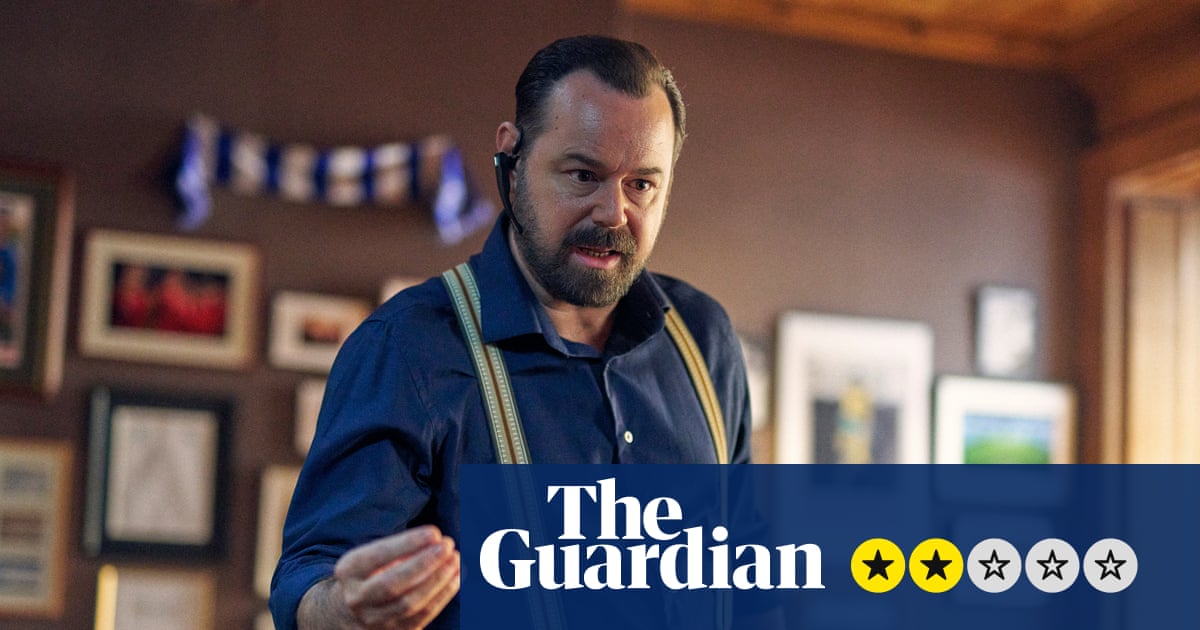
One Last Deal Review: Trapped in the Office with Danny Dyer
Imagine being confined to a single office space for 89 minutes, witnessing a man’s intense, profanity-laced downward spiral through a series of phone calls. This claustrophobic premise forms the core of Brendan Muldowney’s film, One Last Deal, starring British tough-guy icon Danny Dyer. It’s a bold choice for any filmmaker, placing immense pressure on character, dialogue, and pacing to sustain audience engagement. This One Last Deal Review delves into whether this confined drama successfully navigates its challenges, or if it succumbs to the inherent difficulties of its one-room setup and the controversial nature of its central conflict.
It’s important to distinguish this film from Klaus Häro’s Finnish drama of the same title, which follows an antique dealer on a final, significant transaction. Our focus here is squarely on the British production, where Dyer takes center stage as a man desperately clinging to his career, and perhaps, his sanity.
Jimmy Banks' Final Play: A Glimpse into a Spiraling Career
The film introduces us to Jimmy Banks (Danny Dyer), an old-school football agent who has seen better days. Plagued by past problems and seemingly blacklisted from the upper echelons of the game, he now manages only one client: the enigmatic Matt Gravish. Banks’ primary objective is to orchestrate “one last deal” – a desperate attempt to revive his career and secure his client’s future. The entire narrative unfolds within the confines of a single London office, making it a quintessential “one-room drama.”
For any piece of cinema, restricting the action to one location presents a significant hurdle. Filmmakers must rely heavily on compelling dialogue, dynamic character performances, and creative cinematography to prevent the setting from becoming stagnant and visually monotonous. In One Last Deal, this challenge is amplified by Banks’ character – a raging alcoholic, perpetually on the phone, screaming and swearing. His entire world, and by extension the viewer’s, is filtered through these conversations, often via a Bluetooth headset or speakerphone. While this offers an intimate, voyeuristic look into his crumbling professional and personal life, it also limits the scope for visual storytelling, demanding a lot from Dyer’s ability to carry the film almost single-handedly.
The Predictability Factor and Banks' Downward Trajectory
Unfortunately, the film struggles to maintain a high enough level of entertainment to keep audiences hooked, even for its relatively brief 89-minute runtime. From the outset, the plot’s trajectory feels all too predictable. As the initial pieces of information are laid out, it becomes remarkably easy for the viewer to connect the dots and foresee the upcoming developments. This predictability saps much of the suspense and dramatic tension that a single-location thriller often needs to thrive.
We are privy only to Banks’ perspective, a choice that deeply immerses us in his personal hell but also contributes to the film’s narrative constraints. We witness his relentless downward spiral, fueled by desperation and perhaps a twisted sense of loyalty. While Dyer is known for his ability to portray intense, often flawed characters, the repetitive nature of the phone calls and the lack of external stimuli make it difficult for even his most ardent fans to find much fresh ground. The film essentially becomes an 89-minute observation of a man deteriorating under pressure, and while that can be powerful, here it often feels like a missed opportunity for deeper exploration.
Repulsive Misdeeds and Ethical Quandaries: The Film's Moral Core
Beyond the confined setting and predictable structure, One Last Deal introduces a far more contentious element that proves difficult for many viewers to stomach: the nature of Matt Gravish’s “misdeeds.” The baseline of these actions – implied to be significant and reprehensible – makes Banks’ efforts to protect his star athlete all the more repulsive. For a film to center its plot around one individual who has committed such a foul act, and then to depict an agent scrambling to ensure they can continue their life seemingly unscathed, feels genuinely disgusting to many, particularly female audiences.
The moral compass of the characters is deeply flawed. Both Banks and Gravish appear to believe they have done nothing wrong, or at least nothing that cannot be smoothed over. This denial, coupled with Banks’ aggressive tactics and loud-mouthed bullying, creates an uncomfortable viewing experience. It takes more than just being called a “loud-mouth bully who nobody likes” for Banks to even begin to question his perspective. This ethical quandary is where the film tests the patience and tolerance of its audience most severely. Does the film intend to challenge our notions of loyalty, justice, and the lengths people go to protect their interests, or does it simply present a morally bankrupt scenario without sufficient depth or consequence?
The decision to build a narrative around such ethically questionable actions, without offering significant introspection or genuine redemption for the characters, leaves a sour taste. It’s a brave, if not always successful, artistic choice to force viewers to confront such themes directly. For a more detailed look into this challenging setup, you might find Danny Dyer's One Last Deal: An 89-Minute Office Drama Trap? an interesting read.
Production Pitfalls and a Disappointing Resolution
While a strong script and powerful performances can elevate a film regardless of its budget or production scale, One Last Deal unfortunately grapples with what has been described as “poor production quality.” This aspect, encompassing everything from cinematography to sound design and overall aesthetic, further detracts from the viewing experience. Even Danny Dyer’s inherent charm and screen presence, which often draw loyal fans, are diminished when hampered by technical shortcomings. The film relies heavily on its composer, but a strong score can only do so much to compensate for other production deficiencies.
The film’s predictability is a recurring issue. As soon as the core conflict and character motivations are presented, the audience can easily “put the pieces together.” This absence of genuine twists or narrative surprises makes the 89-minute journey feel longer and less rewarding. Compounding this, the ending is widely regarded as an unsatisfactory attempt at resolution. In the final 10 minutes, One Last Deal endeavors to rectify the many issues and “travesties” of the preceding 80. However, by this point, most viewers feel that too much goodwill has been lost. It comes across as a “sad excuse to have Danny Dyer in one room for an entire film,” leaving an impression of all hope being lost, despite the viewer having endured the entire ordeal.
The Danny Dyer Factor: Is "One Last Deal" Worth the Watch?
For die-hard fans of Danny Dyer, the prospect of seeing him in a new, intense role might be enough to entice a viewing. His distinctive screen presence, known for bringing a certain raw energy and authenticity to his characters, is undoubtedly the film’s biggest draw. Many loyal followers are accustomed to his particular brand of on-screen “nuisance” and will likely sit through the entire film, regardless of its criticisms. For these viewers, the opportunity to witness Dyer’s performance, even within a challenging framework, might justify the experience.
However, for the casual viewer or those unfamiliar with Dyer’s work, One Last Deal presents a much harder sell. The combination of a predictable plot, a morally repulsive central conflict, production quality issues, and an ultimately unsatisfying ending makes it a difficult recommendation. This isn't a film that delivers high entertainment value or profound insights for a general audience. If you’re seeking a captivating one-room drama with intricate plot twists and deep character development, you might find yourself disappointed. It’s entirely up to the individual to decide if they wish to take the plunge, but for those not specifically drawn by Dyer’s involvement, it might be best to manage expectations carefully.
Consider whether you have a high tolerance for films centered on morally ambiguous characters and a narrative that doesn't shy away from uncomfortable truths. If you're pondering whether the struggle is worth it, Danny Dyer Fans: Is One Last Deal Worth the 89-Minute Struggle? offers further perspective.
Conclusion
One Last Deal is a film that attempts to explore the desperate measures of a disgraced football agent within the tight confines of a single office. While it offers a raw, unfiltered look at Jimmy Banks’ downward spiral, its execution is often hampered by a predictable plot, poor production quality, and a core narrative built around deeply repulsive misdeeds. For fans of Danny Dyer, the film might offer enough of his signature intensity to make the 89-minute journey palatable. However, for a broader audience seeking engaging entertainment or a compelling moral drama, the film’s challenges – from its claustrophobic setting to its unredeeming characters and disappointing resolution – make it a difficult recommendation. Ultimately, whether One Last Deal resonates or repels will depend heavily on individual taste and tolerance for its particular brand of stark, uncompromising drama.